 Physique Pal
Progressive overload
Always know the number you have to beat.
Physique Pal shows you last session's weight and reps on every set row, before you lift. Progressive overload stops being something you try to remember and starts being the obvious next move.
Download Free on the App StoreFree to start · No account required
Progressive overload only works if you remember the last number
Progressive overload is the one principle every training programme agrees on: to keep adapting, the demand has to keep rising. More weight, more reps, more quality sets, better control — something has to go up over time.
The principle is simple. Applying it is where people lose. Standing at the rack trying to recall whether last Tuesday's second set was 155 for 8 or 160 for 6, you round down and repeat a session you already did. Do that across a few lifts and a few weeks and the training stops moving even though the effort never dropped.
The fix is not more motivation. It is having last session's numbers in front of you at the moment you load the bar.
Nobody plateaus because they forgot the principle. They plateau because they forgot the number.
Last session's set, shown before you do this one
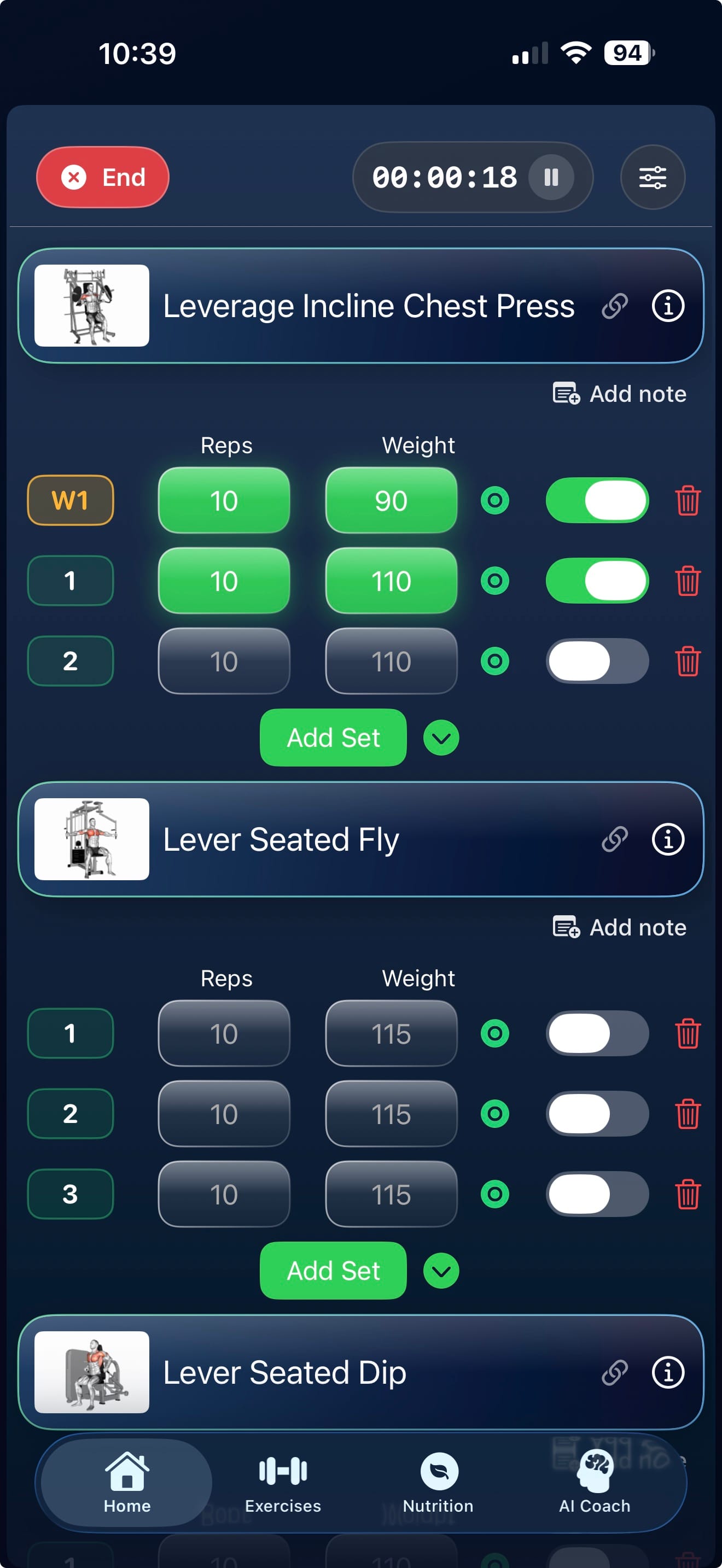
Every set row in Physique Pal carries what you did last time for that exact exercise and set number. Not buried in a history tab — right there, greyed in behind the field you are about to fill.
So the decision is made for you. You see 155 × 8, and the only question left is whether today is 160 × 8 or 155 × 9. That is progressive overload as a default behaviour rather than something you have to remember to do.
- Previous weight and reps on every set row
- Personal records detected and flagged automatically
- Full history per exercise, so you can see the trend not just the last point
- Works offline and with no account — your log is on your device
Overload is more than adding weight
Adding 5 lb every session works for about a month, then it doesn't, and people conclude they have plateaued when they have really just run out of one lever. There are several.
Reps at the same weight, an extra set, cleaner tempo, a longer range of motion, shorter rest for the same output — each is a genuine increase in demand. Tracking all of it is what tells you whether a flat top-set weight is actually a stall or a week where the volume went up instead.
- Weight, reps, and set count logged per session
- Supersets and rest timing tracked, not estimated
- Set roles — warm-up, working, drop, failure — kept separate so warm-ups don't pollute the numbers
See the trend, not just today
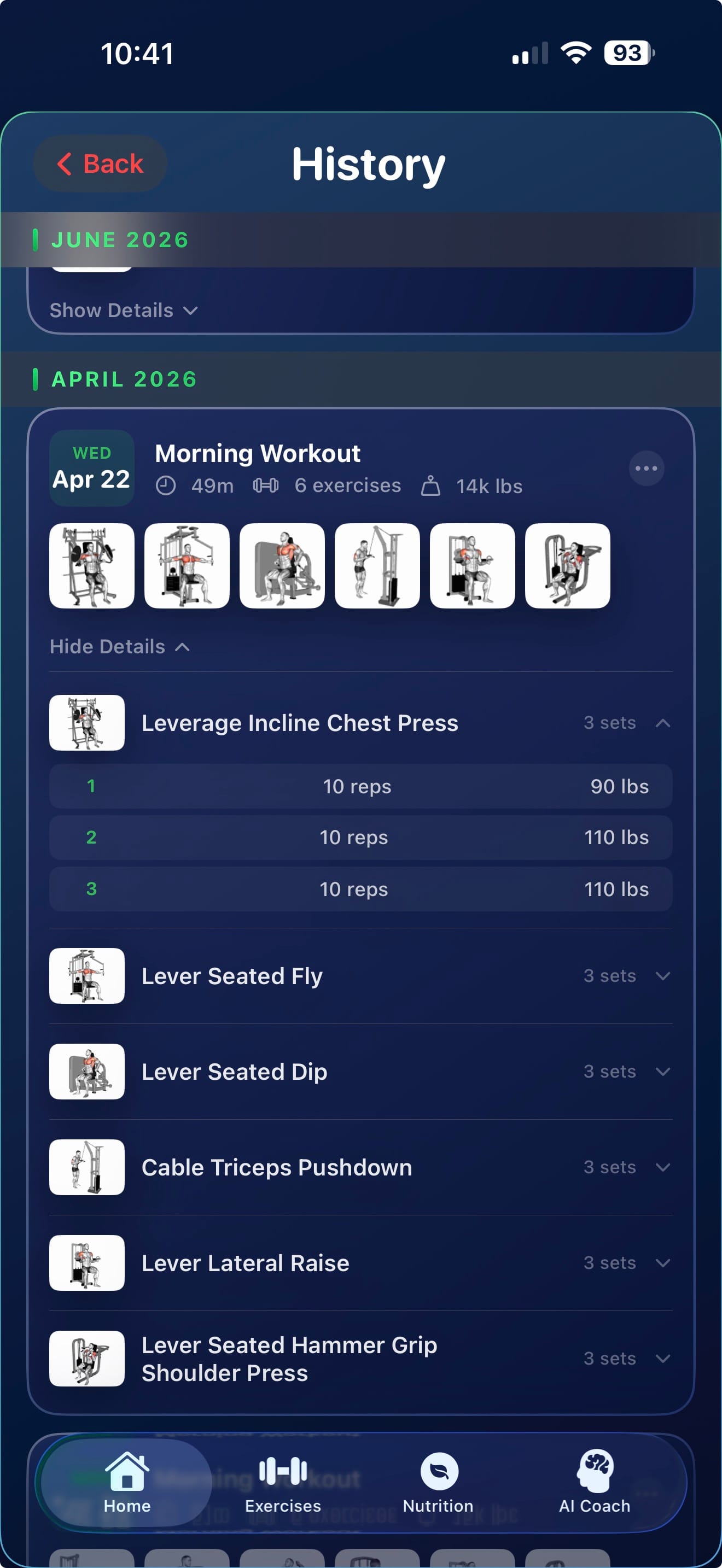
One session tells you nothing. Six weeks tells you everything. Physique Pal keeps the full history for every exercise so you can see whether a lift is genuinely climbing, drifting sideways, or quietly falling off while the effort stays high.
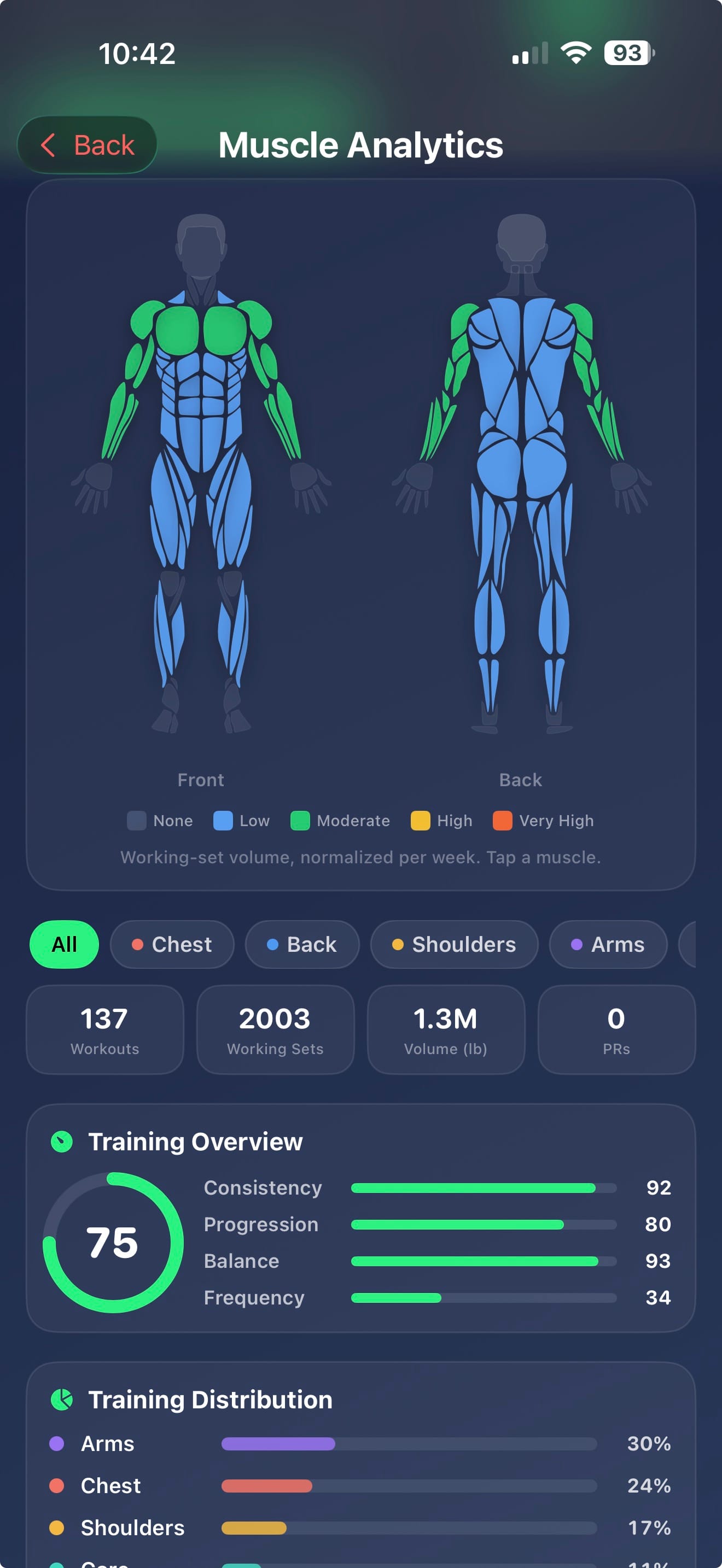
On Premium, the same logged sets feed a full-body muscle heatmap and an AI coach that reads your actual numbers — so the question "is my back work actually progressing?" has an answer built from your training rather than a guess.
Progressive overload questions
What is progressive overload?
Gradually increasing the demand you place on a muscle over time so it has a reason to keep adapting. That can mean more weight, more reps, more sets, better control, or a longer range of motion — anything that makes the work harder than it was last time.
How fast should I add weight?
Slower than most people expect. On big lower-body lifts, 5–10 lb a week is realistic early on and much less once you are past the beginner phase; on smaller upper-body movements it may be 2.5 lb a month, or an extra rep instead. Adding reps at the same weight until you reach the top of your target range, then adding weight and dropping back down, is the most durable pattern.
Do I need an app to track progressive overload?
No — a notebook works, and a spreadsheet works. What you cannot do is run it from memory, because the number you need is the one from three to seven days ago on that exact exercise and set. An app just makes the recall automatic instead of something you maintain.
What if I can't beat my last session?
That is normal and it is information. Sleep, stress, food and accumulated fatigue all move day-to-day performance. One down session is noise; three or four in a row on the same lift usually means you need a lighter week rather than more willpower. Having the history logged is what lets you tell those two apart.
Is progressive overload tracking free in Physique Pal?
Yes. Set logging, previous-session memory, personal records, custom routines and full exercise history are all in the free version, with no account required. Premium adds muscle analytics and AI coaching on top of that data.
Beat your last set, every set
Free to download, no account needed, and your training history stays on your device. 1,000+ exercises with video included.
Download Free on the App Store